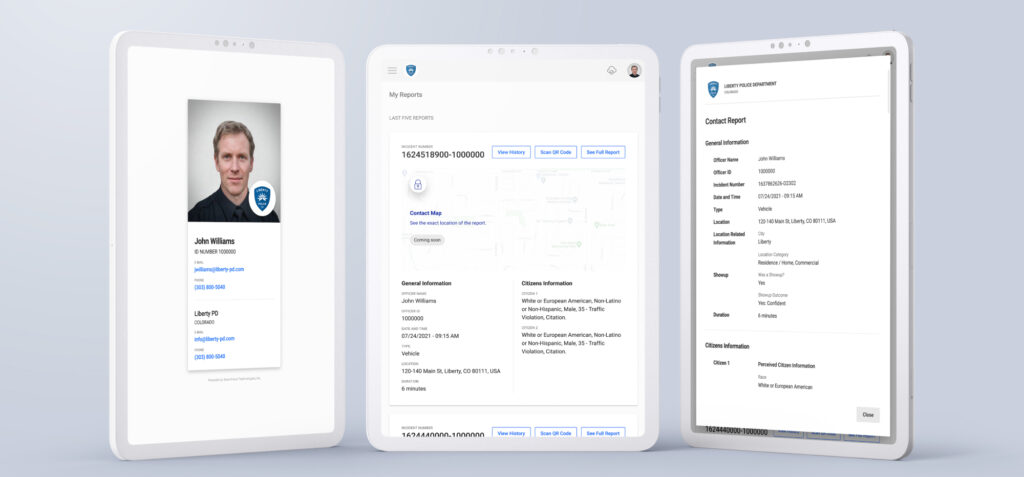
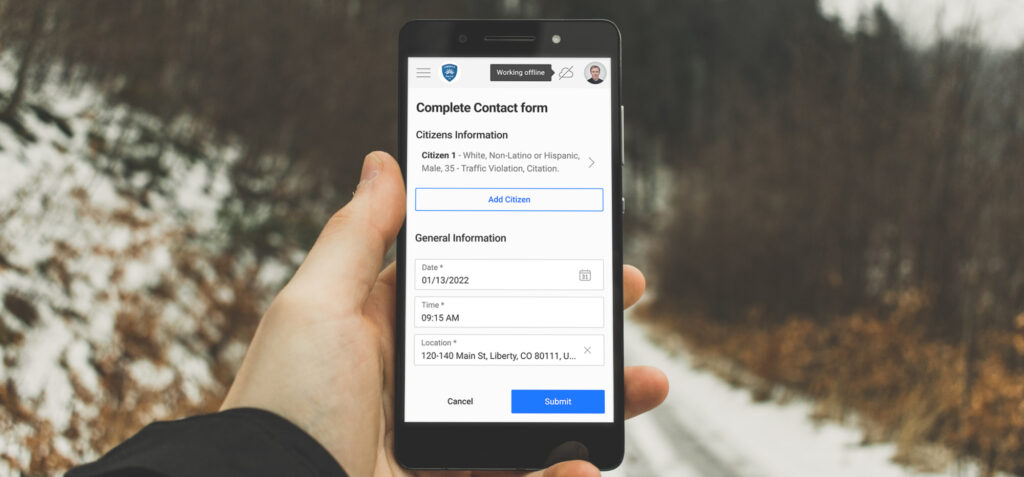
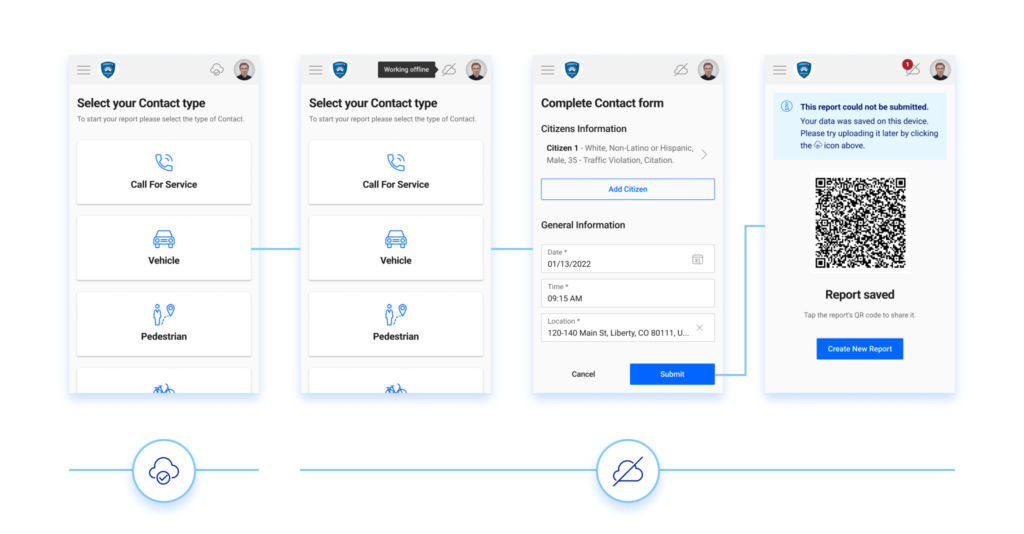
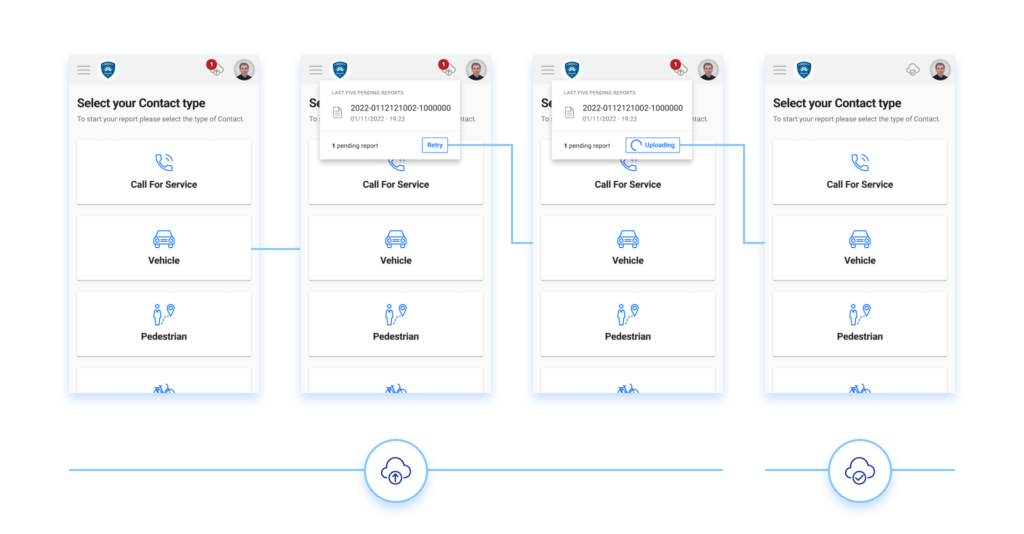
You start working, log in to CitizenContact, keep up with your squad, and start your shift. Later you stop a vehicle but your device is offline. You told us about this problem and we addressed it. That’s why we developed Offline Reporting. Now, even with no internet connection, the app starts working offline. So, all the contact reports will be saved locally. After your connection is restored, you can submit them.
Every year there is pressure to perform at a high level in the Professional Standards Unit to keep your officers and community safe, fairly investigate internal concerns, and to maintain and improve community trust. However, 2021 will challenge leaders in Professional Standards to do even more since we’re coming off a year of nationwide calls for police reform.
2challenges for Professional Standards units seem to be rising to the top of the list:
Implementing an effective Early Intervention System
Providing data to your Community and FBI for transparency and trust
Read on to learn how to overcome these challenges…
1 .Implementing an effective Early Intervention System (EIS)
An effective EIS protects officers from disciplinary action and provides greater levels of safety and wellness to them and those they contact while performing their public safety duties. There’s a preponderance of discussion and best practices by national organizations and accreditation bodies like the IACP, NAACP, and CALEA recommending agencies purchase and deploy EIS software to be pro-active in managing officers’ behaviors and performance so public trust is not eroded.
So, what makes an effective EIS?
Establishing an EIS Policy
Effective EIS policies outline the purpose of the system, the data being captured, who will be notified (supervisor/command staff), what their responsibilities are, the options and actions they should consider, timeframe, and what should be documented.
Setting an intervention warning point based on the number and weight of multiple indicators during a small window of time.
An early intervention policy or system that is based on 2 use of force incidents within a year or 1 use of force incident within 6 months is not sufficient to be proactive and to intervene early since the timeframe is too long and there are other factors to consider like complaints, pursuits, crashes, etc. EIS software that can calculate and display multiple incidents grouped within a 90-day window effectively help supervisors see potential problems ahead of time. In addition, effective EIS software should trigger based on weighting. For example, a complaint may be weighted less than a use of force event, but when multiple complaints on an officer have been made during a short window of time, the EIS warning should trigger even if the officer has not been involved in a use of force incident during this time.
Timeliness of displaying officers reaching an intervention warning point.
An EIS software system that only calculates incidents after the reports have made it through every level of review and is marked complete is not effective because the time this takes could be several months. One agency experienced a significant lawsuit when 1 of their officers was involved in a shooting and their EIS system did not trigger a flag even though the officer was involved in 3 use of force incidents and multiple complaints because several of the reports were still “in review.” Effective EIS systems calculate risk as soon as an incident report is filed, not upon review and completion.
Documenting supervisor/command review & actions.
Effective EIS software will have a supervisory/command staff module that displays officers hitting the pre-set threshold for a potential intervention, why they hit the threshold, the ability to document the date the officer flag was reviewed, associated actions taken, and results.
2.Providing data to your Community and FBI for transparency and trust
Maintaining and building trust with the community you serve is paramount in today’s LE environment. 3 pieces of data your agency should consider sharing with your community are:
EIS Software Implementation: Inform your community that your agency has implemented EIS software. In a nationwide survey, 75% of White respondents and 80% of Black and Hispanic respondents favored the use of early warning systems as an accountability mechanism.
FBI Reporting: Inform your community that your agency shares it’s use of force data with the FBI national database. Your community can go to: https://crime-data-explorer.fr.cloud.gov/officers/national/united-states/uof to see if your agency is listed as a participating agency. Being on this list helps your community make data-driven decisions to form perceptions and trust vs. media-driven decisions.
Current Contacts and Incident Data: Inform your community of officer contacts vs. use of force and complaint incidents. In addition to FBI reporting, this also provides your community the means to make data-driven decisions on whether your agency is performing within acceptable boundaries.
Effective Professional Standards software will automate your FBI reporting and quickly produce reports on use of force, complaints, and pursuit data.
If your Professional Standards Unit needs to overcome either of these top 2 challenges in 2021, let me know and I’ll be happy to educate you on EIS software choices and more best practices.
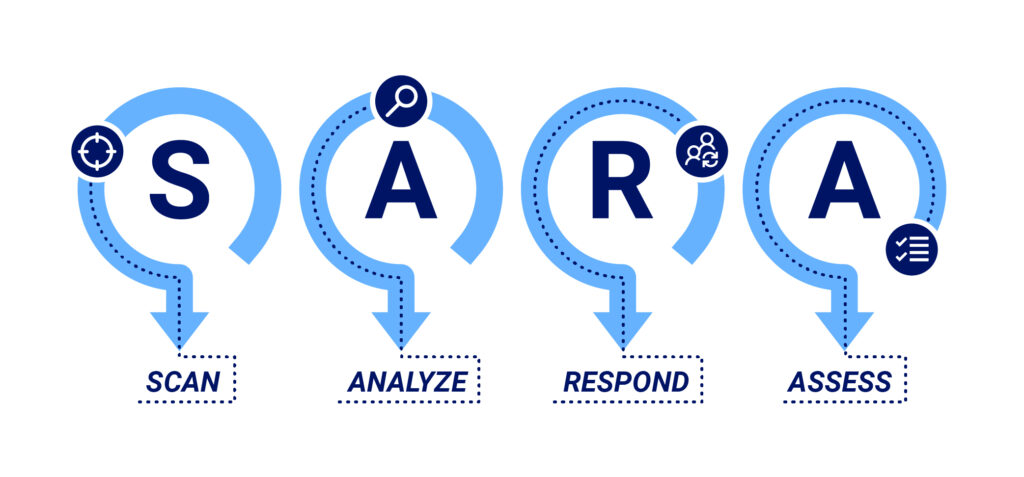
Just about everyone in law enforcement has heard of the S.A.R.A. model for solving crime problems, but few know how to force-multiply it for maximum impact.
As a reminder, the evidence-based approach called Problem-Oriented Policing is based on the SARA model and the acronym stands for:
Scan
Analyze
Respond
Assess
Most commanders, investigators, and crime analysts do a great job of defining the problem through the Scan stage and studying the problem through the Analysis stage to come up with an operational response. However, it’s at the Respond and Assess stages that effectiveness begins to break down reducing the impact of success.
So, what causes the break-down?
How the Response is Communicated – Most agencies rely on email as their main communication platform. This means higher priority emails on a problem-based policing project for example are mixed in with emails. Also, disseminating information about problem-oriented policing projects often require large files of maps, photos, and videos which strain the limits of email. With officers receiving so many emails and studies showing that less than 10% of an officer’s daily in-box of emails are open, read, and acted upon, you can easily see how email is not the most effective way to communicate problem-oriented policing projects and information. Having a communication platform that visualizes for officers the crime projects they are responsible for and displays maps, photos, and videos associated with the project, prevents things from slipping between the cracks of email and improves the accountability of the Response.
Lack of Collaboration – Passing on updates and assigning tasks on a crime project is challenging with officers working rotating shifts and specialty units operating within information silos. Traditional shift briefings can be helpful, but attendance may not be consistent and competing priorities leave little time to focus on specific crime projects. Keeping up to date on what’s been done, any new developments, and what needs to be done next is extremely challenging without a systematic way for officers from Patrol, specialty units like Narcotics and Code Compliance, crime analysts, and supervisors to share information in a collaborative space that is accessible anytime, from anyplace.
Pulling data together to Assess the project – Let’s say a goal was set to reduce calls for service at a problem location or traffic collisions at a busy intersection by 40% within 2 months. Many agencies are challenged with assessing exactly what actions were completed, why they missed (or made) the goal, and how to adjust efforts if they missed the goal so they don’t miss again on a future deployment. Without a central location of information on who did what and when during the project, it’s hard to assess if the miss was due to a lack of resources, lack of training, lack of collaboration, lack of accountability, etc.
Solution:
To get the best results out of the SARA model, provide your agency and officers with a crime reduction platform like SmartForce® designed specifically for law enforcement to maximize the R and A stages. For more information or to get a demonstration of how SmartForce® maximizes the Response and Assessment stages of problem-oriented policing give me a call or send me an email.
We’ve recently been introduced to new
language and concepts like “social distancing” and “shelter in place orders” thanks
to COVID-19. The implications of this
are far reaching and definitely impact public safety & law enforcement.
Change is always hard, but in times of
crisis, change is easier. Great
leaders know this and do 2 things; 1) Manage fear through direction,
protection, and order and 2) Initiate positive change with vision,
alignment, and execution. Great
leaders are not afraid of parting with “the way we’ve always done it.” Instead,
they realize that necessity is the mother of invention and they use emergencies
as an opportunity to better their agency as a whole.
The Great Recession of 2008 had an enormous impact on law
enforcement staffing and forced police departments and sheriff offices to do
more with less. Some leaders took
advantage of this crisis and used their time and energy to reinvent their
organizations. The necessity to do more
with less was an opportunity for them to invent and share a new vision of how
to be successful at delivering public safety vs. spending time and energy
trying to get back to “full-staff.”
These great law enforcement leaders made innovative tweaks
and decisions on how they delivered public safety and guided their
organizations to unprecedented levels of crime reduction and community
service.
COVID-19 and its implications offer another significant opportunity
for law enforcement leaders to step-up and become great leaders in
our ever-changing world today.
Examples of this are already happening. The Savannah Police Department leadership
suspended group meetings like shift-briefing and is now conducting their
briefings virtually through an investment in technology to be more
efficient. With this change, they are
providing protection against virus transmission/exposure, management direction,
and order to their officer’s lives at work.
They’re also using their technology investment in other ways to create
more time for higher priority calls and bringing more value to their community
faster. Click here for
the Savannah Channel 11 Top Story, “New technology helping keep Savannah
officers safe, connected amid COVID-19 pandemic.”
Whether it’s the COVID-19 pandemic or some other crisis, become a great
law enforcement leader by managing fear and creating a positive vision of
organizational change. In the words of a
great Chief of Police recently promoted to City Manager, “Technology like
SmartForce® can be the difference between simply doing what has always been
done, and doing it more efficiently” – John Jackson, MCJ.
If you’d like to learn if investing in new law enforcement
leadership & management technology will have a high return on investment
and can facilitate great organizational change for you, call or
email me.
Thanks for all you do to make the world a safer
place!
Are you looking for a way systematically and
realistically implement crime reduction strategies throughout your agency? Are you unsure what your crime analyst should
produce to be more effective? Do you
want to make your crime reduction accountability meetings more meaningful and
productive?
These are some of the questions I hear quite
frequently while working with law enforcement agencies across the country who
are at various stages of excellence with implementing and executing pro-active
crime reduction strategies and concepts like CompStat, Hot-Spots Policing,
Intelligence-Led Policing, DDACTS, Problem-Oriented Policing, etc.
Since there is very little evidence-based
research and even fewer educational opportunities to learn from the best how to
guarantee results, most agencies are stuck trying to get better at a very slow
pace.
At SmartForce®, we’re here to change
that. In May of 2020, we will be hosting
an educational conference for Command Staffs so your agency can get the
evidence-based educational experience that can inject new life, speed, and
results into your crime reduction model.
You’ll get guidance on how to infuse hot-spot
and offender-based practices into your day-to-day operations systematically so
they become as sustainable as responding to calls for service and investigating
crimes.
Can you imagine how great it will be to have
the right real-time data, the right real-time communication, and the right
framework for your executives down to your officers to be their best at
reducing and preventing crime for your community?
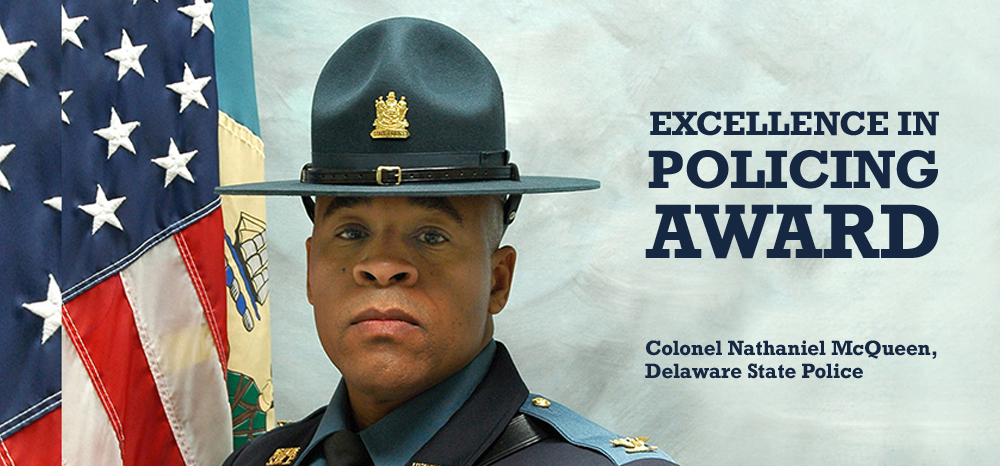
Congratulations to Colonel Nathaniel McQueen, Delaware State Police on their Excellence in Policing Award.
The Center for Police Practice, Policy and Research gives this award once a year to a current sworn police officer, supervisor, commander, or executive who is a leader in their agency and has been a champion for implementation of innovative strategies that bring about change and improve policing.
Law enforcement organizations are moving toward a blended policing approach of both calls for service and data-driven crime reduction. Click here for a FREE download of the most powerful eBook on reducing crime available today.
There is no shortage of training classes available in the public safety sector. However, this abundance of training is actually what makes it hard to decipher which ones provide the highest impact. Here are my Top 5 Tips & Tricks for selecting the best training conferences.
1- Look for or confirm that the training is “Evidence-Based.”
Conferences that provide speakers sharing their perspectives and best practices have value, but not as much value as speakers who have published evidence-based research that shows certain practices will generate a repeatable successful result.
2- Look for training that matches your department’s highest priorities.
This probably is a given, but I’ve seen many times that participants go to training events because they are local or free. Although the training pertains to the improvement of public safety, it may have nothing to do with the department’s focus on reducing gang activity for example. The return on investment is much higher, even if you had to spend the money traveling across the country for 3 days for an evidence-based training on something related to your 5 year plan, than attending 3 days of local, free training on public safety subjects that are not as critical and are not evidence-based.
3- Always ask for an Agenda.
Advertisements for training are to capture your attention. Make sure the conference can back up the hype. Getting a copy of an agenda, even if it is in draft form can help you determine some key factors on how valuable the training may be. Make sure the featured speakers have more than 30 minutes to discuss the topic. Speakers that have 1.5 to 3 hours of time on a topic will be presenting more than their theories and perspectives. They will likely be sharing the details on how to implement their perspectives in your agency. Great speakers understand adult learning. With a larger block of time on the agenda they can include case studies, workshops, and/or a review of guides, policies or other resources they have designed.
4- Determine if Speakers are Nationally-known or Associated with the COPS Office or the Bureau of Justice Administration.
When you or one of your subordinates goes to a conference, there is only so much that can be retained and put to use at your agency. Retaining whatever level of information from a nationally-known speaker or one that has been associated with COPS Office or BJA grants would certainly provide a high return on investment of time and money.
5- Does the conference have a Theme?
A conference that has a theme like Gang Violence, Sex Trafficking, or Pro-Active Policing has more value than a conference with a hodgepodge of topics because attendees get multiple perspectives, ideas, and ways to be successful on that particular challenge in Public Safety instead of one way to think about 12 different challenges in Public Safety.
My last piece of advice is to go to a conference that matches the criteria above so you know for certain what a high impact training conference looks and feels like, and that all others should be measured against. So, if your agency is focused on Pro-Active, data-driven policing, the next opportunity to attend this kind of high impact/low cost educational conference is the SmartForce™ Command Academy Aug. 8-10 in Breckenridge, CO. This conference will feature Nationally-known speakers that have participated in both BJA and COPS Office grants and have published evidence-based data. Email me and I’ll send you the draft agenda. Then, click here for more details and to register before all the seats are taken.

 The SmartForce® Team